A Boot Collector Guide
How to Care for Your Cowboy Boots
Regular cleaning, conditioning, and proper storage keep leather supple and help prevent cracking. Always test any product on an inconspicuous spot first — leather often darkens right after cleaning or conditioning and returns to normal once it's dry, though some conditioners darken it for longer. Read product labels carefully.
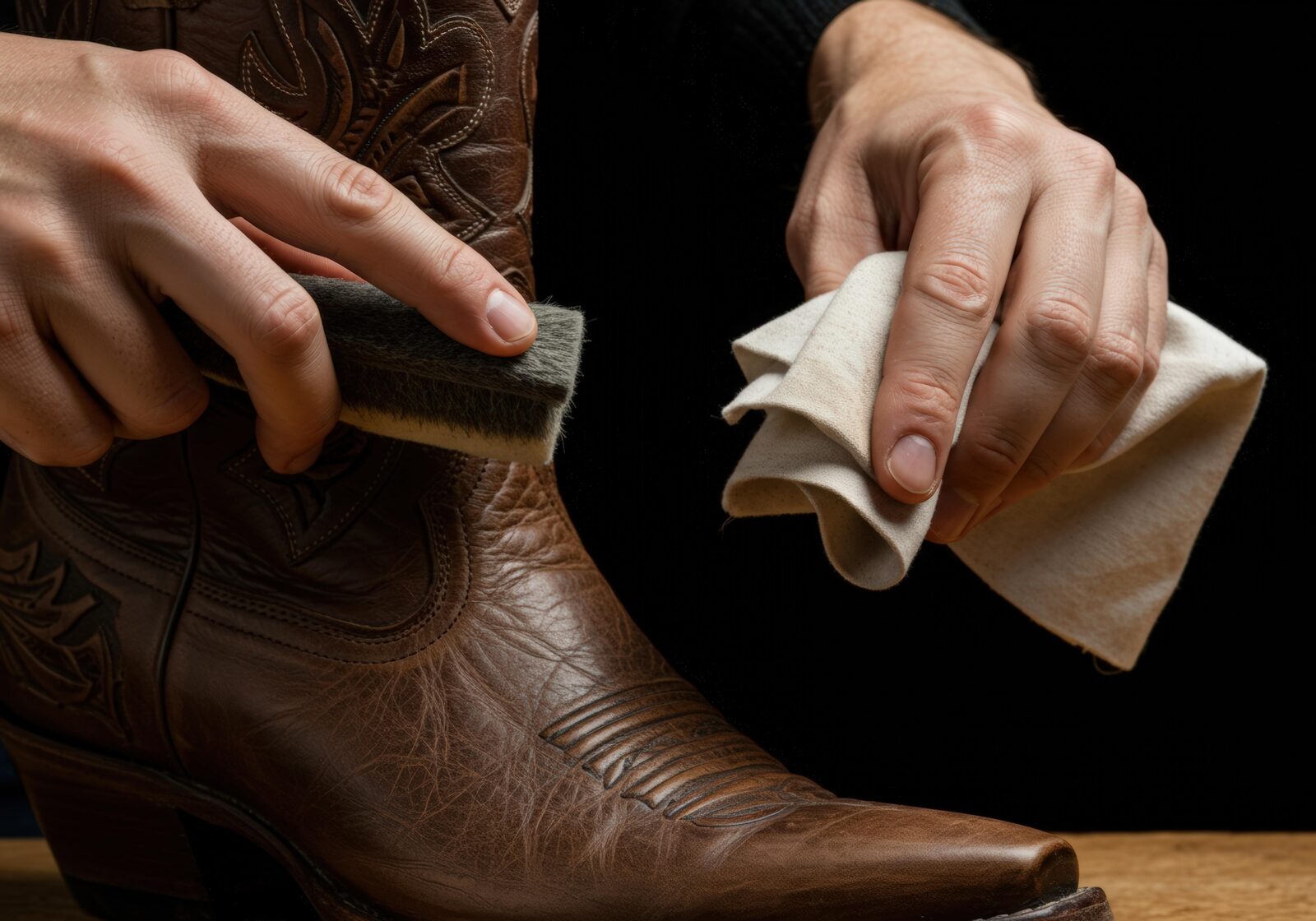
What You'll Need
Not all of these are required for every pair — pick what fits the leather and the job.
- Soft-bristled cleaning brush (horsehair recommended)
- Clean, dry applicator cloths or pads
- Damp cloths or pads
- Drying towel
- Buffing mitt or brush
- Leather cleaner (saddle soap or a foaming leather cleaning soap)
- Leather conditioner (choose carefully — oil-based options may darken leather)
- Colored shoe cream for touch-ups
- Leather polish (optional — opinions differ on this one)
- Water and stain repellent spray (optional, best reserved for work boots)
- Boot trees, shaft supports, charcoal bags, and dust bags for transport and storage
Cleaning
- Remove loose dirt and dust.
Brush gently with a soft-bristled brush, paying attention to seams and crevices. Don't brush firmly around the edges of inlay or overlay — it can damage them.
- Wipe down.
Use a slightly damp cloth to lift remaining grime. Avoid soaking the leather.
- Clean with a mild soap.
Apply a mild leather cleaner or saddle soap with a horsehair dauber brush or a dampened cloth, then wipe off all soap residue with a fresh cloth.
- Treat tough stains only if necessary.
Stains often don't fully lift from leather — keep expectations realistic so the leather itself doesn't take the damage.
- Air dry completely.
Let the boots dry at room temperature. Never use a hairdryer, radiator, or other direct heat — it dries out and cracks the leather. Expect the leather to look darker for about 24 hours after cleaning.
Conditioning
- Apply conditioner.
Once the boots are fully dry, work a small amount of a high-quality leather conditioner into the leather with a clean cloth or applicator pad, using small circular motions for even coverage.
- Let it absorb.
Give the conditioner 15–30 minutes to penetrate the leather fibers.
- Buff off the excess.
A clean cloth or pad removes any residue and brings up a bit of shine.
- Keep to a schedule.
Condition every 3–6 months, or more often with heavy use or harsh conditions.
Polish and Protection — Proceed Carefully
A well-conditioned pair of boots already has decent shine and some natural water resistance. Polish and repellents earn their place on boots that see heavy or all-weather use, but they come with real trade-offs.
Polish
A matching or neutral cream polish, buffed to a shine with a soft brush, covers minor scuffs well. Avoid heavy wax-based polishes — wax can clog the leather's pores, trap moisture, darken the hide unevenly, and stiffen it over time.
Water repellent
A non-silicone repellent spray or beeswax product, tested on a hidden spot first, adds protection on work boots. Many repellents contain silicone, which can be effectively impossible to remove once it's in the leather — best avoided on custom or fine leather pairs.
Care by Leather Type
Crocodile, alligator, caiman, lizard, pirarucu & snake
Sensitive to UV. Condition in the direction of the scales with a conditioner made for exotics. Curling is a sign of dryness. Dab away moisture right after wear and let the boot air-dry naturally.
Ostrich
Keep out of prolonged sun to avoid fading and dryness. Clean with a damp cloth and condition with an exotic-leather formula to keep the quill pattern supple.
Stingray & elephant
Durable and scratch-resistant, but still worth routine cleaning and conditioning. Store away from plastic bags, heat, and humidity.
Hair-on-hide
Vacuum gently with a brush attachment to clear dust and keep hair from matting; wipe matted spots in the direction of the hair. Fur thins fastest where it rubs constantly, so rotate wear to extend its life, and store away from plastic bags.
Suede
A suede brush lifts dirt and restores the nap; a protective spray helps with stains and water. Use a suede eraser on scuffs, and keep suede dry — for stubborn marks, spot-clean with a little white vinegar or alcohol before brushing.
General Care & Storage
If they get soaked
Stuff with newspaper or a clean towel to hold their shape and pull out moisture quickly, then remove the stuffing and let them air-dry away from heat for at least 24 hours.
Storage
Stand boots upright in a cool, dry, well-ventilated spot out of direct sunlight. Boot trees and shaft supports hold their shape, keep air moving, and help prevent odor — skip plastic bags, which trap moisture.
Rotate pairs
Give boots a day off between wears when you can, so they fully dry out from foot moisture before going back on.
Know your leather
These are general guidelines for most smooth leathers. Exotic and distressed (often sueded) leathers may need the specialized products noted above — when in doubt, check the maker's care guide or ask a professional cobbler.