A Boot Collector Guide
Toe Shapes and Heel Styles
Toe and heel shapes aren't just styling — each one is built with a specific use in mind. Here's what the common names actually mean, and what each is built for. Styles and names can vary a bit from one bootmaker to the next.
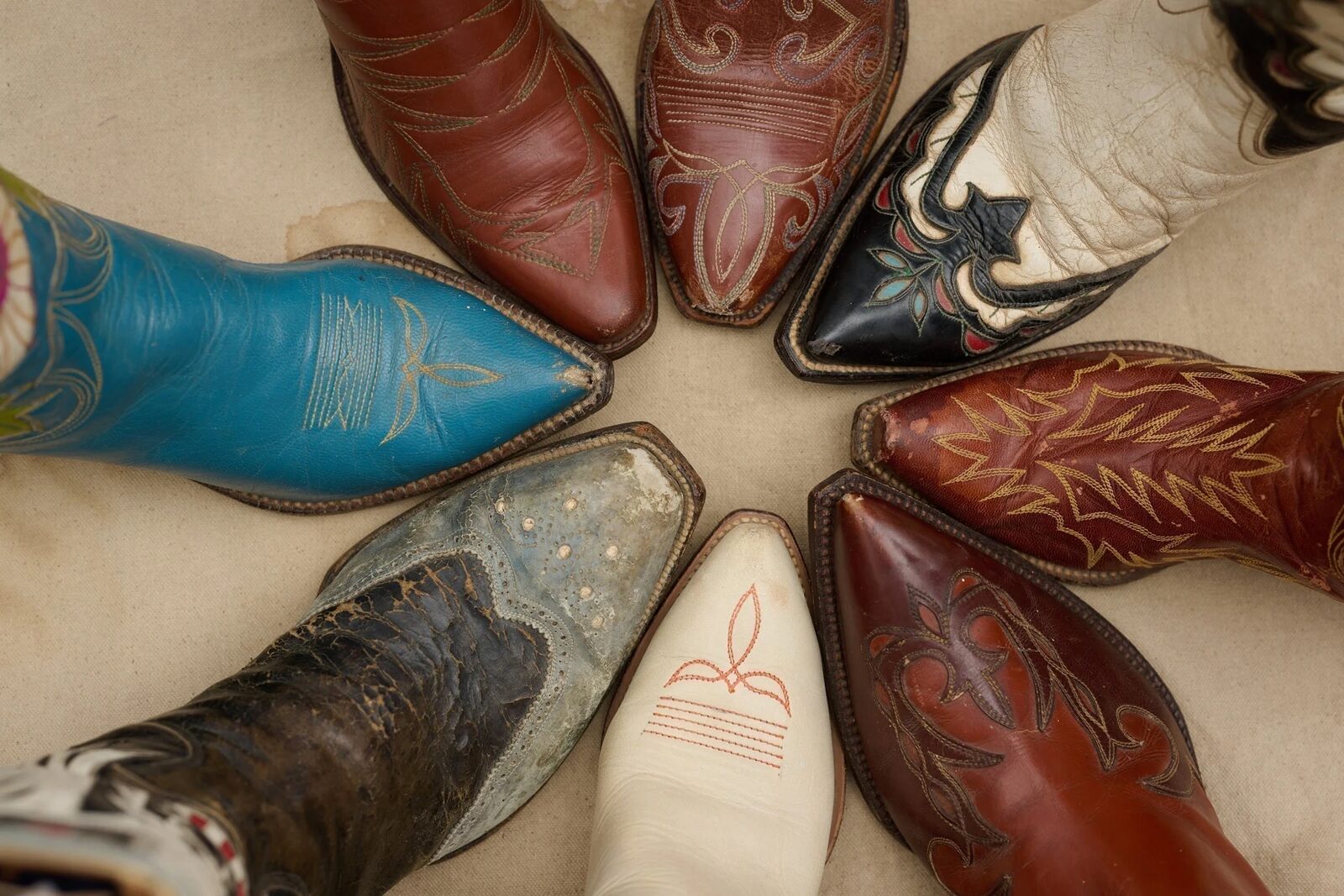
Toe Shapes
Pointed Toe
also called J toe, 1 toeThe classic western silhouette, and the easiest shape to slide into a stirrup. Works for formal wear and everyday use alike.
Snip Toe
also called D toe, X toe, N toeA tapered toe with a flat tip instead of a point — a more contemporary, polished look.
Round Toe
classic, almond, or roperA gentle curve with a toe box that gets progressively roomier by type. Classic is the more traditional shape; roper trades some of that for comfort and durability, and is the usual pick for everyday work.
Square Toe
cutter, standard, or broadA flat, squared-off end built for toe room. Cutter is a slightly wider snip toe; broad goes roomier still, suited to extended wear or riding.
For a visual reference, the J.B. Hill and Lucchese websites both keep galleries of these shapes side by side — useful for seeing how they actually differ on a finished boot, since heel and toe naming can vary a bit by bootmaker.
Heel Styles
Most cowboy boot heels are built from stacked leather with a rubber cap glued and nailed to the bottom. What separates one style from another is mostly height and intended use — and it's worth knowing that early cowboy boots generally ran with higher heels than most boots do today.
Roper Heel
~1" — shortestShort, flat, and comfortable for walking and riding alike.
Fowler Heel
~1 1/8"An everyday work-wear heel — the lowest-profile straight-sided style, occasionally slanted, with a slightly more formal look than a roper.
Walking Heel
~1 3/8"A more traditional height that still keeps stability and support without giving up comfort.
Cowboy Heel
~1 1/2"–1 3/4"The most traditional and recognizable shape — narrower and more slanted than a walking heel. This is the classic western silhouette.
Riding / Fashion Heel
~2"+ — narrowestA taller heel, historically meant to help keep a boot seated in the stirrup. The narrowest of the group, and more common on women's boots.