A Boot Collector Guide
Inlay versus Overlay
Two different ways of adding a contrasting piece of leather to a boot — on the shaft, the vamp, or anywhere else a pattern goes — and once you know what to look for, they're easy to tell apart on sight.
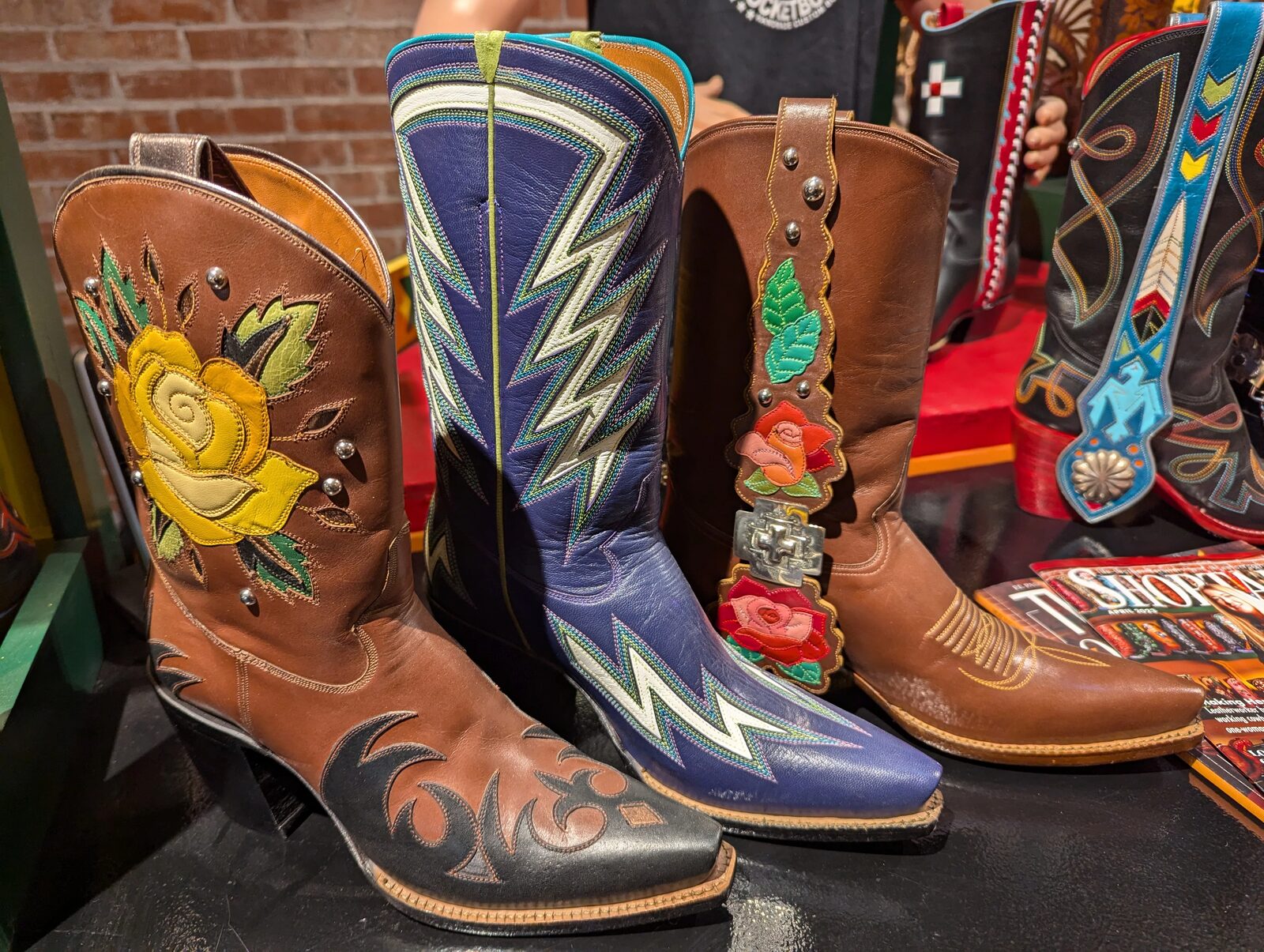
Boot examples are from Rocketbuster in El Paso, Texas.
Inlay
Flush with the surfaceHarder to executeA shape is cut out of the top leather layer, and a different colored or textured piece is set into that exact space — often with the edges skived, or carved thinner, to keep the join from adding bulk. The result sits level with the surrounding leather, for a smooth, sleek, flush look. It's unforgiving work: there's no room to hide a bad cut, which is part of why it reads as a mark of real pattern-cutting skill.
Overlay
Raised, 3DFaster & cheaperA contrasting piece of leather is cut, then glued or sewn directly on top of the base leather instead of into it. That extra layer creates a raised, three-dimensional effect with a visible border where the two pieces meet — bolder and more dimensional than inlay, though thicker. It's faster and less exacting to produce, which is why it shows up more often across price points.
How to Tell Them Apart
Run a finger over the contrast panel. Flush with the surrounding leather means inlay; a raised edge you can catch a fingernail under means overlay. Some boots combine both techniques in one design — an overlay piece with an inlay cut into its own surface, finished with hand tooling on top — which is its own small showcase of what a shop can do.
Who to Look For
Inlay and overlay work at a high level shows up across a number of the makers in our bootmaker profiles, including Rocketbuster, Lucchese, and Little's Boot Co. Lisa Sorrell has taken the technique furthest into fine-art territory of anyone in this series, and has also written in depth on it for anyone who wants to go further into the craft.