A Boot Collector Feature
Lucchese
Founded by Sicilian immigrants outfitting Army officers in San Antonio, Lucchese spent the next century becoming the boot a sitting president wrote to from his hospital bed, promising to get back in the saddle in a pair of his own.
The Story
Lucchese began in 1883 as Lucchese Bros. Boots & Shoes, founded in San Antonio by Sicilian immigrant Salvatore "Sam" Lucchese and his brothers, whose first customers were Army officers stationed at nearby Fort Sam Houston. Sam pushed the young company toward better materials and newer manufacturing methods from the start, and after a stroke forced him to step back in 1923, his son Cosimo took over and formally incorporated the business in 1929.
The brand's most storied chapter opened when Cosimo's son, Sam Lucchese, became president in 1961. Over the following decade he built a client list that ran from working ranchers to Hollywood, while the company took on one of its strangest and most celebrated commissions: a four-year project for Acme Boots, begun in 1949, to build a full set of boots commemorating every U.S. state. Fewer than twenty-five pairs are known to survive today.
Ownership has changed hands more than the name has: Blue Bell, the parent company of Wrangler, bought Lucchese in 1970; the workshop relocated from San Antonio to El Paso in 1986; Arena Brands acquired it in 1998; and the company was renamed Lucchese Bootmaker in 2012. In 2009, the Texas Legislature formally recognized the brand's contribution to the state's cultural history — a rare honor for a boot company, and a measure of how thoroughly "Lucchese" and "Texas boot" had become synonyms.
What They're Known For
Lucchese's defining claim isn't a material or a decoration, it's a shape: the twisted-cone last, a form engineered to mirror the natural curve of the foot rather than force the foot into a generic mold. Developed by Sam Lucchese, the founder's grandson, it still guides roughly 150 to 200 individual steps in the construction of every pair. The company's own motto states the priority plainly: "The last comes first" — fit is treated as the foundation everything else in the boot depends on, not a feature added at the end.
Notable Wearers
No customer defined the brand quite like Lyndon B. Johnson. Records show him buying his first documented pair as a U.S. senator in October 1952 — the same visit in which Lady Bird bought her own for $75 — and both pairs are now held at the LBJ Presidential Library. Johnson invited Sam Lucchese and his son to the LBJ Ranch for a private fitting in 1966, and in April 1972, writing from a hospital bed, he told Lucchese that when he was able to ride again, "it will be in a pair of Lucchese boots."
"When I am able to do that, it will be in a pair of Lucchese boots."— Lyndon B. Johnson, in a 1972 letter to Sam Lucchese
Reading the Label
Lucchese’s label names are real quality tiers, so the label tells you a lot about how a pair was made.
- San Antonio on the label — Lucchese moved from San Antonio to El Paso in 1986, so a San Antonio label usually means an older pair.
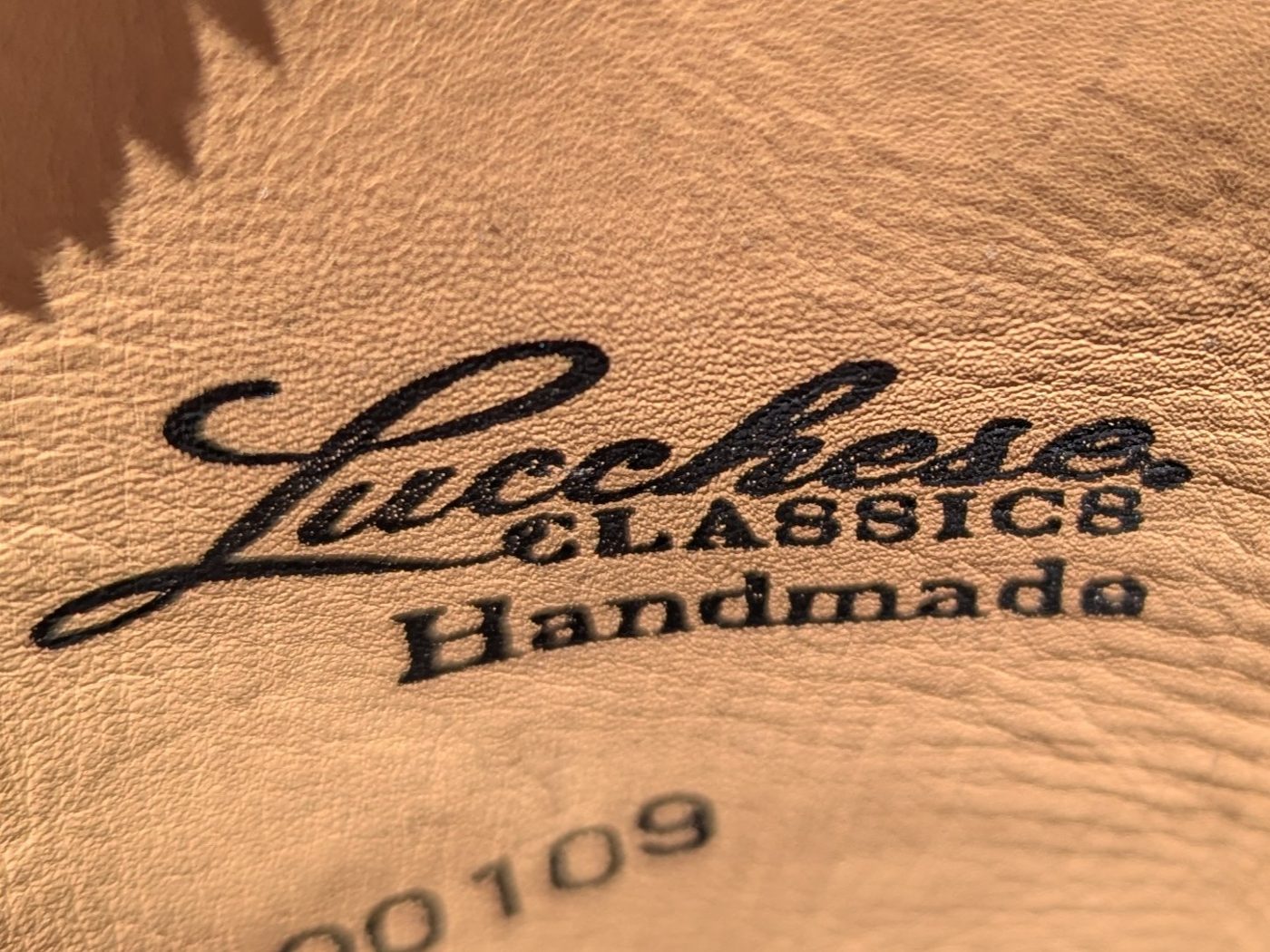
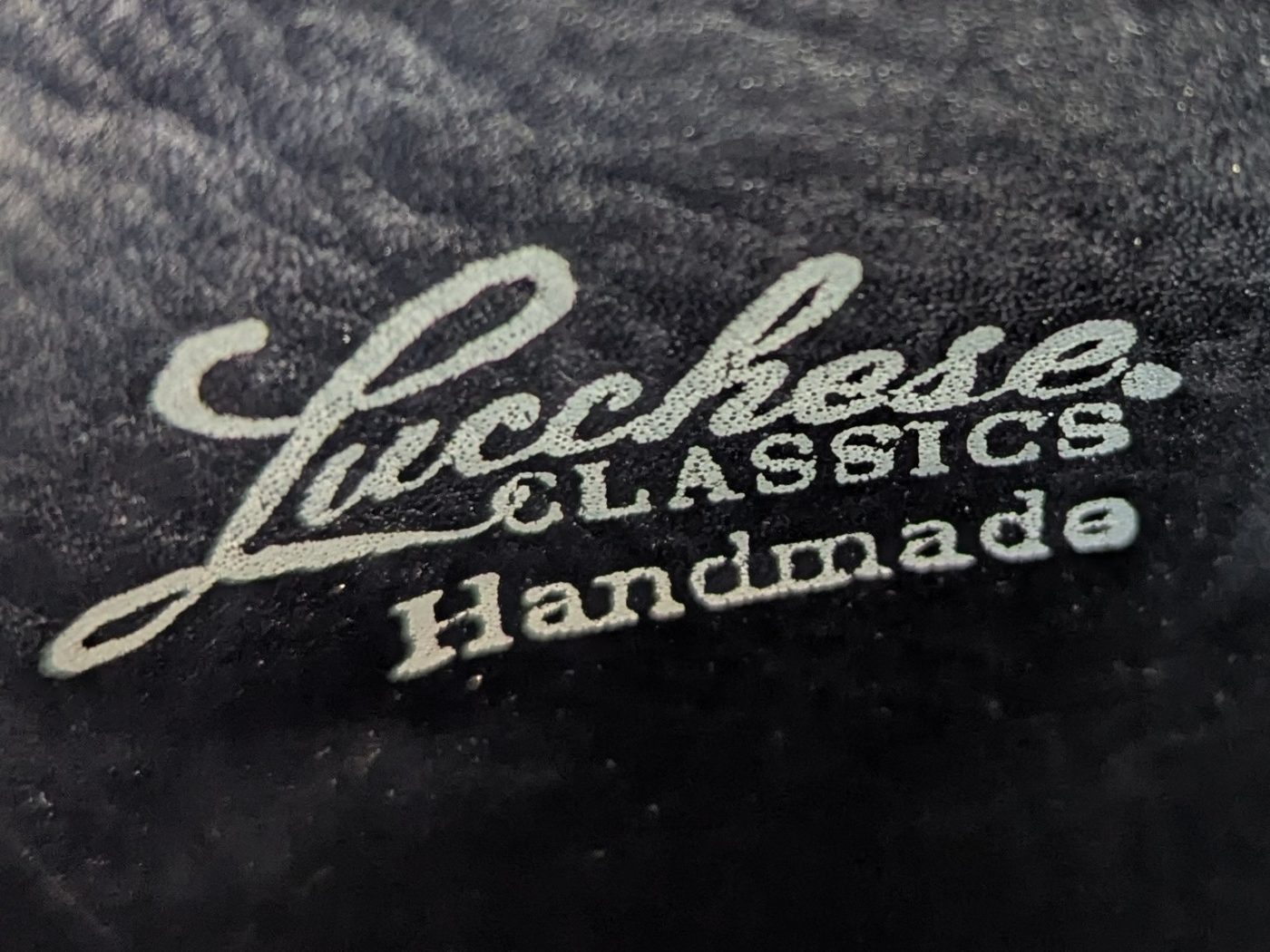
- Classics — the foundation of the brand: handmade and, in the company’s words, built one pair at a time to exact specifications, with hand stitching and burnishing. Style numbers typically begin with L, GY, E, BL, or F. The “Lucchese Classics Handmade” stamps below are this line.
- The older ladder — collectors remember three levels: Classic Handcrafted at the top, a middle line called “2000,” and “Lucchese 1883” (also seen as “1883 by Lucchese”) as the entry line.
- Since 1883 — introduced in 2013 to replace the 1883 name as the entry line. These are machine-made, more affordable boots, and some are made in Mexico. Style numbers may begin with C, N, M, T, or I.
- Heritage — a step up, with more style options and better materials. Style numbers begin with H, and the boots are made in the USA.
- Lucchese Collection — the luxury line, handmade on the company’s twisted-cone last and sold through Lucchese’s own stores and website.
- Custom — made-to-measure pairs built for one customer.
Tier descriptions come from Lucchese customer service and collector discussions. Style-number prefixes are a guide, not a guarantee; Lucchese customer service can look up a style number.
Labels & Markings
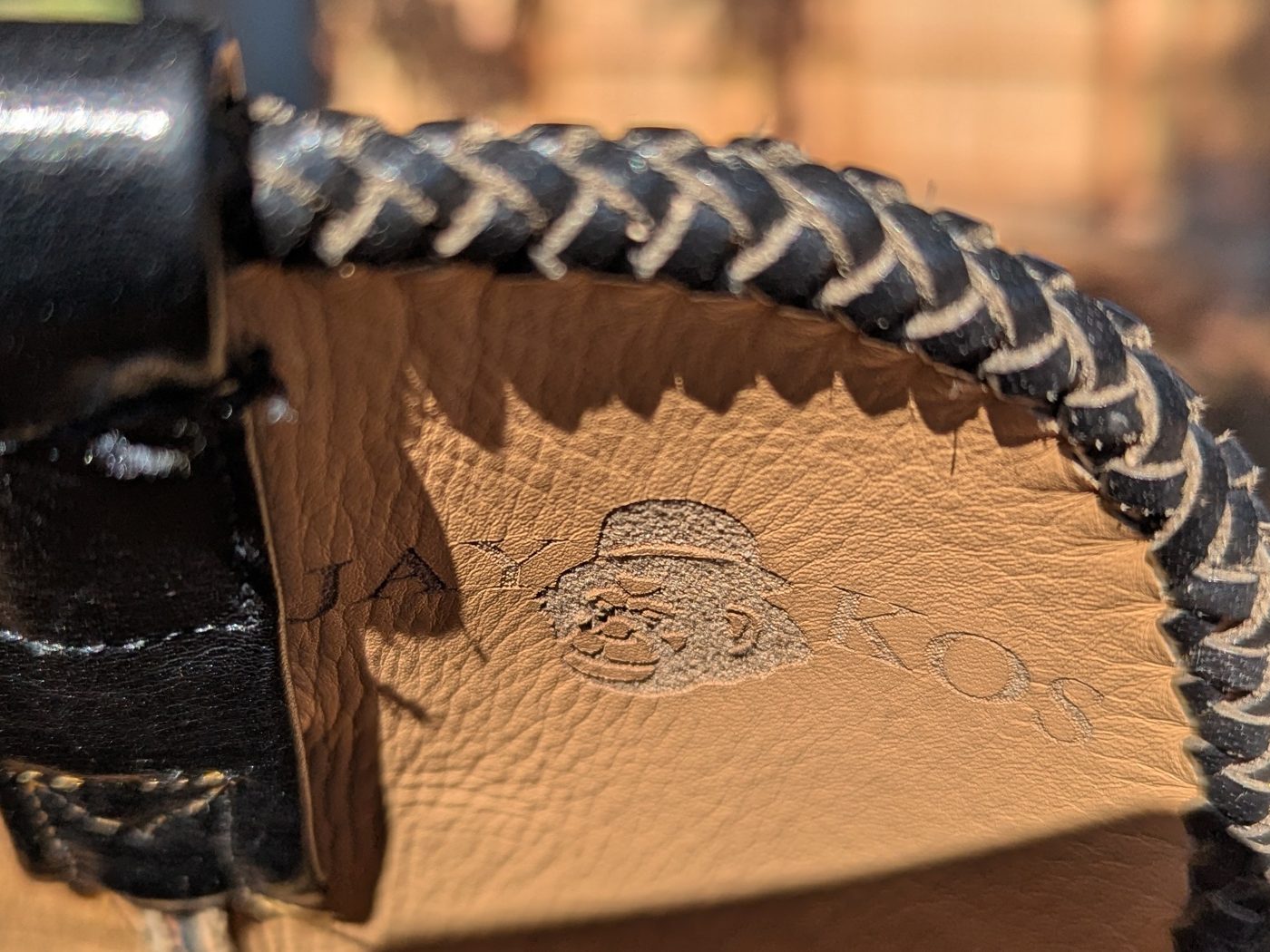
Markings from pairs in the TW Collection, including a collaboration pair. Select a photo to see it full size.
Lucchese still builds boots in Texas around the same idea Sam Lucchese started with in 1883 — a last built for the foot, not the other way around.
See more at lucchese.com