A Boot Collector Guide
How to Decipher Boot Sizing
Boots arrive from everywhere now — US, Mexican, Australian, and European makers all label sizes differently, and custom boots often arrive with no size marked at all. Here's how the labeled systems relate, and the actual foot measurements to fall back on when there's no label to trust.
Sizes Around the World
European sizing runs on a metric scale; Japan's "Mondopoint" sizing is just foot length in centimeters; Mexican and Australian/New Zealand sizing each follow their own regional conventions. Published conversion charts don't always agree with each other by more than a half size — where our sources disagreed, we've shown a range rather than pick a winner.
Men's
| US | UK / AU·NZ¹ | EU | Mexico² | Japan (cm) |
|---|---|---|---|---|
| 6 | 5.5 | 38–39 | 4.5–5 | 24 |
| 6.5 | 6 | 38–39 | — | 24.5 |
| 7 | 6.5 | 39–40 | 5–5.5 | 25 |
| 7.5 | 7 | 40–41 | — | 25.5 |
| 8 | 7.5 | 41 | 6–6.5 | 26 |
| 8.5 | 8 | 41–42 | — | 26.5 |
| 9 | 8.5 | 42 | 6.5–7 | 27 |
| 9.5 | 9 | 42–43 | — | 27.5 |
| 10 | 9.5 | 43 | 7.5–8 | 28 |
| 10.5 | 10 | 43–44 | — | 28.5 |
| 11 | 10.5 | 44 | 8–8.5 | 29 |
| 11.5 | 11 | 44–45 | — | 29.5 |
| 12 | 11.5 | 45 | 9–9.5 | 30 |
| 13 | 12.5 | 46 | 10–10.5 | 31 |
¹ Men's UK and Australia/NZ sizing generally track each other, but the sources we checked disagreed by about half a size at the same US size — treat this column as approximate. ² Mexico-specific charts were the least consistent of any system we checked, varying by about half a size between sources; shown as a range.
Women's
| US | UK | EU | AU·NZ³ | Mexico² | Japan (cm) |
|---|---|---|---|---|---|
| 5 | 3 | 35–36 | 5 | 22–23 | 21.5–22 |
| 5.5 | 3.5 | 36 | 5.5 | — | 22 |
| 6 | 4 | 36–37 | 6 | 23–24 | 22.5–23 |
| 6.5 | 4.5 | 37 | 6.5 | — | 23 |
| 7 | 5 | 37–38 | 7 | 24–25 | 23.5–24 |
| 7.5 | 5.5 | 38 | 7.5 | — | 24 |
| 8 | 6 | 38–39 | 8 | 25–26 | 24.5–25 |
| 8.5 | 6.5 | 39 | 8.5 | — | 25 |
| 9 | 7 | 39–40 | 9 | 26–27 | 25.5–26 |
| 9.5 | 7.5 | 40 | 9.5 | — | 26 |
| 10 | 8 | 40–41 | 10 | 27–28 | 26.5–27 |
| 11 | 9 | 41–42 | 11 | 28–29 | 27.5–28 |
³ Australian/NZ women's sizing is generally stated to match US sizing number-for-number (confirmed directly against an Australian retailer's own chart) — the most confident international data point on this page.
Foot Length by Size — the Measurement That Matters Most
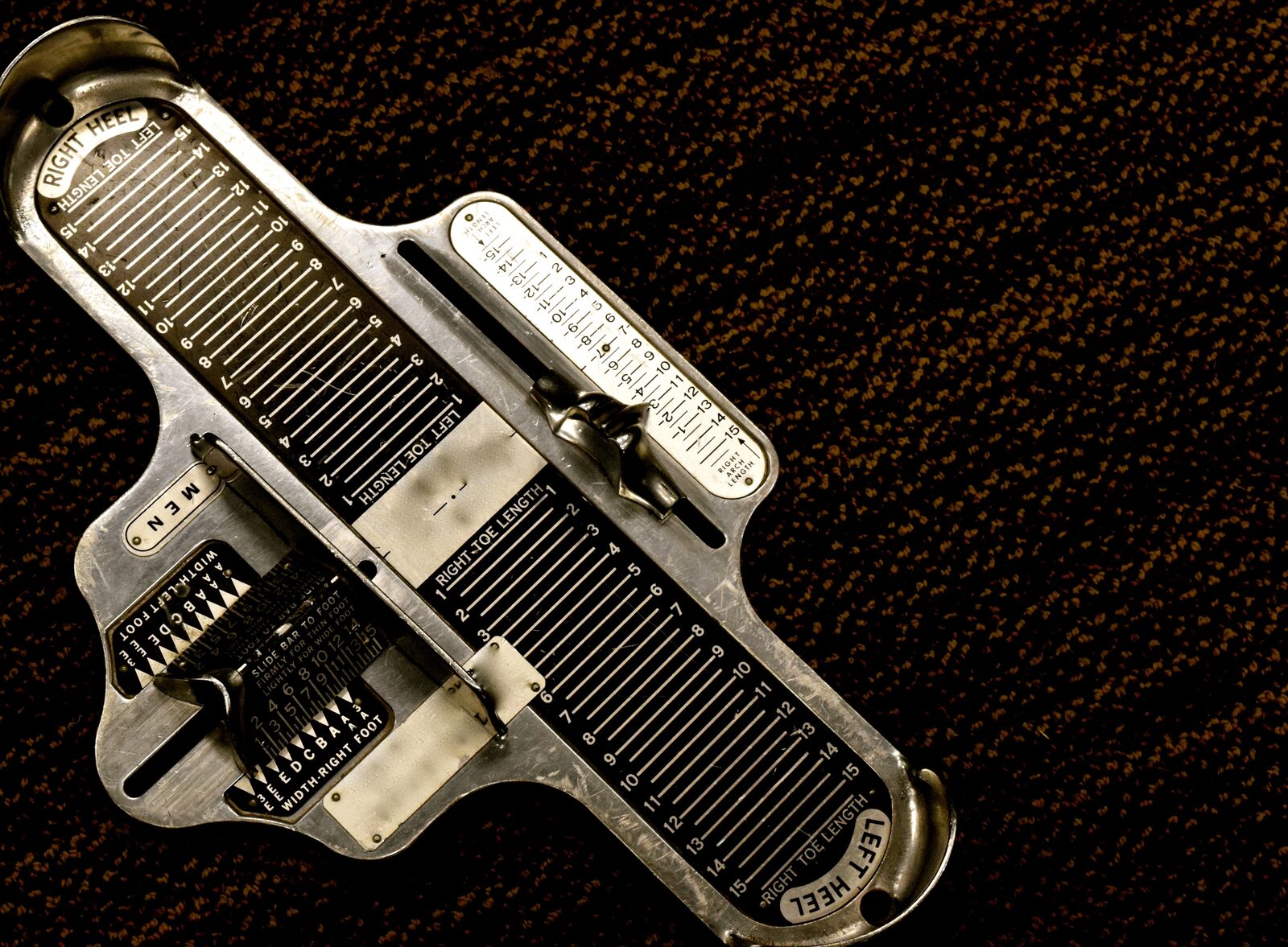
This is the chart to reach for when a boot has no size stamped in it at all, which is common on older or fully custom pairs. It converts size directly to actual foot length, in inches and centimeters, so you can measure your own foot — see our foot measuring guide — and work out a likely size with no label to go on.
Men's
| US Size | Inches | CM |
|---|---|---|
| 6 | 9.3" | 23.5 |
| 6.5 | 9.5" | 24.1 |
| 7 | 9.6" | 24.4 |
| 7.5 | 9.8" | 24.8 |
| 8 | 9.9" | 25.4 |
| 8.5 | 10.1" | 25.7 |
| 9 | 10.3" | 26.0 |
| 9.5 | 10.4" | 26.7 |
| 10 | 10.6" | 27.0 |
| 10.5 | 10.8" | 27.3 |
| 11 | 10.9" | 27.9 |
| 11.5 | 11.1" | 28.3 |
| 12 | 11.3" | 28.6 |
| 13 | 11.6" | 29.4 |
Women's
| US Size | Inches | CM |
|---|---|---|
| 5 | 8.50" | 21.6 |
| 5.5 | 8.75" | 22.2 |
| 6 | 8.88" | 22.5 |
| 6.5 | 9.06" | 23.0 |
| 7 | 9.25" | 23.5 |
| 7.5 | 9.38" | 23.8 |
| 8 | 9.50" | 24.1 |
| 8.5 | 9.69" | 24.6 |
| 9 | 9.88" | 25.1 |
| 9.5 | 10.00" | 25.4 |
| 10 | 10.19" | 25.9 |
| 10.5 | 10.31" | 26.2 |
| 11 | 10.50" | 26.7 |
Measured heel-to-toe, the same way our foot measuring guide describes. Real feet rarely land exactly on a chart value — round to the nearest size, and size up if you're between two.
Width by Letter, in Inches and CM
Width letters are the part of sizing with the least agreement industry-wide — multiple reference sources gave meaningfully different inch values for the same letter at the same size, and the Brannock Device company (which set the original fitting standard) says plainly that width terminology isn't standardized across manufacturers. The numbers below are one consistent, widely used reference scale, not a fixed rule — Western boot brands in particular are known to run their own width standards, so treat this as a starting point rather than a guarantee.
Men's — ball-of-foot width
| US Size | B (narrow) | D (standard) | E (wide) | 2E (x-wide) | 4E (xx-wide) |
|---|---|---|---|---|---|
| 7 | 3.13" / 7.9cm | 3.38" / 8.6cm | 3.63" / 9.2cm | 3.75" / 9.5cm | 4.00" / 10.2cm |
| 8 | 3.25" / 8.3cm | 3.50" / 8.9cm | 3.75" / 9.5cm | 3.88" / 9.9cm | 4.13" / 10.5cm |
| 9 | 3.38" / 8.6cm | 3.63" / 9.2cm | 3.88" / 9.9cm | 4.00" / 10.2cm | 4.25" / 10.8cm |
| 10 | 3.50" / 8.9cm | 3.75" / 9.5cm | 4.00" / 10.2cm | 4.13" / 10.5cm | 4.38" / 11.1cm |
| 11 | 3.63" / 9.2cm | 3.88" / 9.9cm | 4.13" / 10.5cm | 4.25" / 10.8cm | 4.50" / 11.4cm |
| 12 | 3.75" / 9.5cm | 4.00" / 10.2cm | 4.25" / 10.8cm | 4.38" / 11.1cm | 4.63" / 11.8cm |
Women's — ball-of-foot width
| US Size | AA (narrow) | B (standard) | D (wide) | E (x-wide) | 2E (xx-wide) |
|---|---|---|---|---|---|
| 6 | 2.81" / 7.1cm | 3.06" / 7.8cm | 3.31" / 8.4cm | 3.44" / 8.7cm | 3.56" / 9.0cm |
| 7 | 2.94" / 7.5cm | 3.19" / 8.1cm | 3.44" / 8.7cm | 3.56" / 9.0cm | 3.69" / 9.4cm |
| 8 | 3.06" / 7.8cm | 3.31" / 8.4cm | 3.56" / 9.0cm | 3.69" / 9.4cm | 3.81" / 9.7cm |
| 9 | 3.19" / 8.1cm | 3.44" / 8.7cm | 3.69" / 9.4cm | 3.81" / 9.7cm | 3.94" / 10.0cm |
| 10 | 3.31" / 8.4cm | 3.56" / 9.0cm | 3.81" / 9.7cm | 3.94" / 10.0cm | 4.06" / 10.3cm |
| 11 | 3.44" / 8.7cm | 3.69" / 9.4cm | 3.94" / 10.0cm | 4.06" / 10.3cm | 4.19" / 10.6cm |
Note the letter swap between men's and women's scales — B reads narrow on a men's chart but standard on a women's chart. Letters beyond this range (women's AAA, 3E; men's C, 3E, 5E, 6E) exist too, but are uncommon enough in boots to leave off a quick-reference table.
Men's and Women's Sizes Don't Just Shift by One
Women's sizes generally run about 1.5 to 2 sizes different from the equivalent men's size — a men's 9 corresponds to roughly a women's 10.5 to 11, not a women's 9. Width differs too: men's boots tend to run wider than women's at the same nominal length, which is part of why converting a men's size to women's (or the reverse) by number alone can leave you in a boot that's technically "sized right" and still doesn't fit.
Is It Really a Men's or Women's Boot?
Boot styles cross gender lines easily; sizing doesn't. If you're trying to figure out who a boot was actually built for, measure the width at the ball of the foot and the overall length against the charts above, and check the width letter stamped in the shaft. A men's boot in a B width would be unusually narrow, and a women's boot in a D width would be unusually wide — either one is a sign the labeling may not match the build.
If You Can't Try It On
Measure your own foot length and width first — see our foot measuring guide — then compare against the length and width tables above, or check the sizing chart for the specific brand you're considering if one exists. A half size can be as little as a quarter inch of difference, which a thick sock or a comfort insert can often resolve if a boot you love runs just slightly big.