A Boot Collector Guide
Just What is Leather Tooling?
Leather tooling gets misapplied often enough in boot listings that it's worth being precise. It isn't fancy stitching, and it isn't inlay or overlay — it's a hand-carved and stamped art form that's becoming genuinely rare, as the number of craftspeople who still do it shrinks.
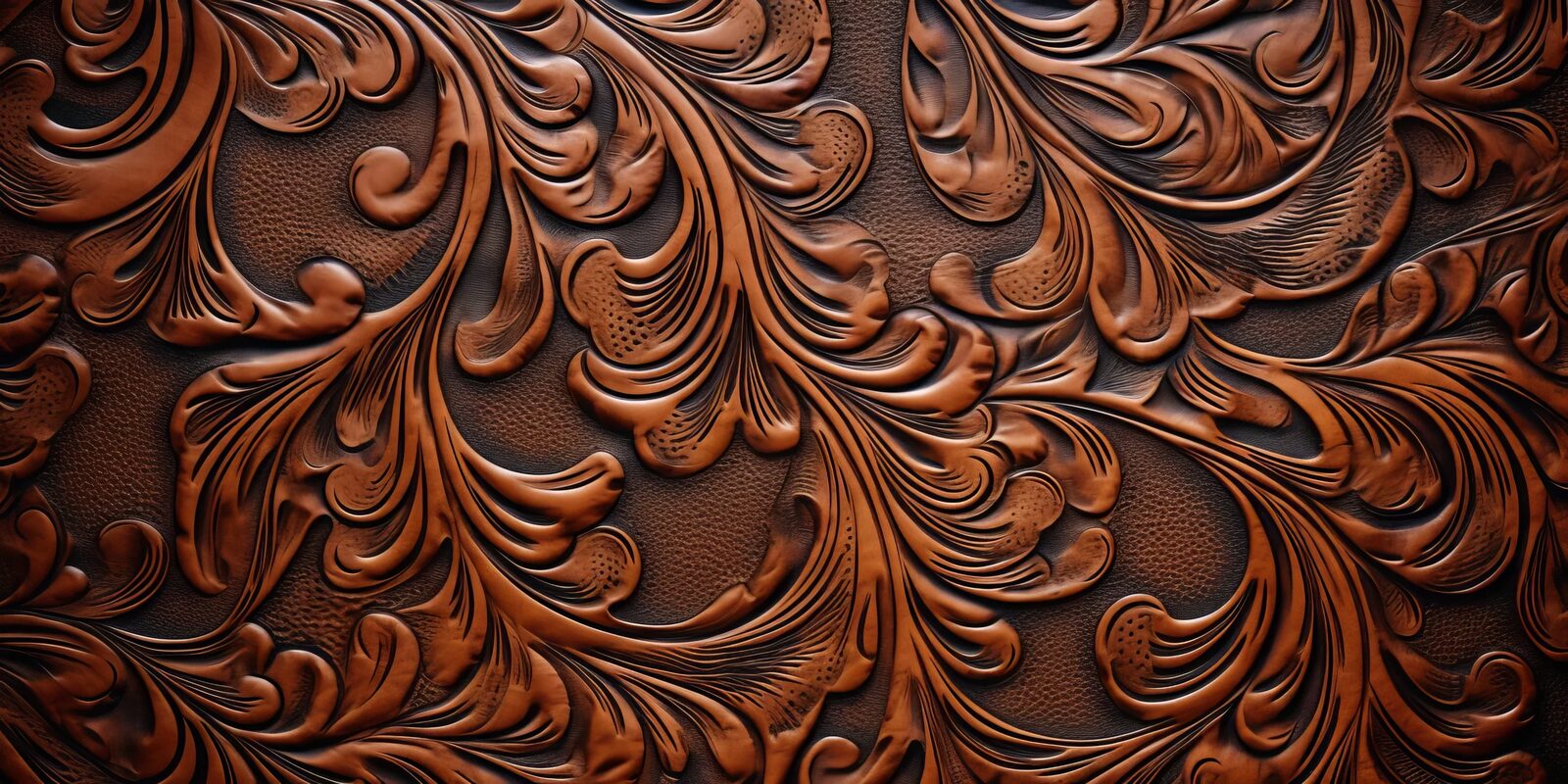
What Tooling Actually Is
Tooling is a multi-step, hand-carved process worked into moistened, vegetable-tanned leather with a swivel knife and a set of shape and texture stamps. Rather than pressing a design on top, it builds an intricate, three-dimensional pattern — flowers, animals, geometric weaves — into the surface itself, which then hardens as the leather dries.
How a Tooled Design Gets Made
- Casing the leather.
The hide is moistened evenly with a damp sponge, swelling and softening the fibers enough to hold a detailed impression.
- Transferring the design.
A pattern drawn or printed on paper is placed on the damp leather and traced with a stylus, leaving a faint outline.
- Carving the outline.
A swivel knife cuts shallow lines — roughly half the leather's thickness — along the traced design.
- Stamping and shaping.
A rawhide mallet drives various stamping tools to add depth and detail: beveling compresses leather on one side of a cut so the adjacent area reads as raised, backgrounding pushes down the area around the design so it stands out, and smaller tools like pear shaders, veiners, and seeders add fine detail such as plant veins or tiny circular impressions.
- Finishing.
Once the leather dries, dyes, oils, or waxes add color and a protective layer — the start of the patina a tooled piece develops over years of use.
The Tools of the Trade
- Vegetable-tanned leather — the preferred material, for its firmness, minimal stretch, and ability to hold a sharp impression once cased.
- Swivel knife — a knife on a pivoting axis, used for the fine carved outlines.
- Stamping tools — a set of metal tools with different patterned heads for different textures and effects.
- Rawhide mallet — strikes the stamping tools with even, controlled pressure.
- Modeling spoon / stylus — traces the pattern and smooths edges.
- Shaping tools — create specialized edging and textured backgrounds, giving the ridges and valleys that produce the final three-dimensional effect.
- A hard work surface — a stone slab or similarly solid, flat surface, essential for crisp, consistent impressions.
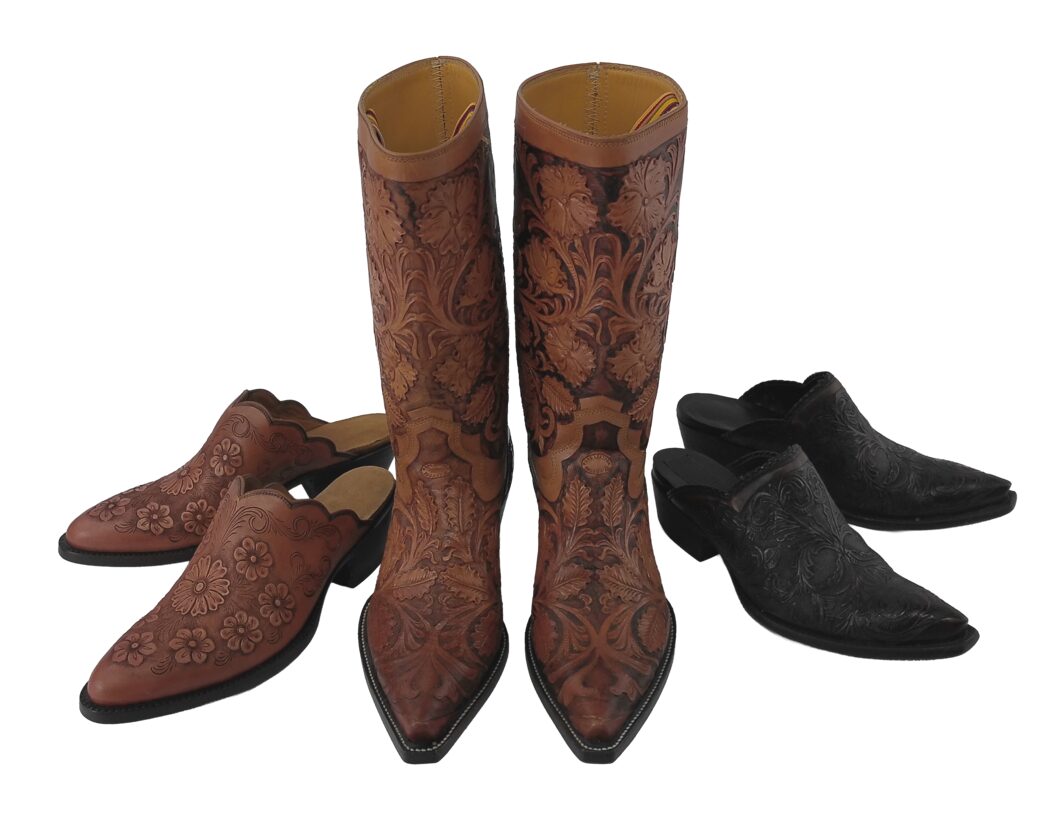
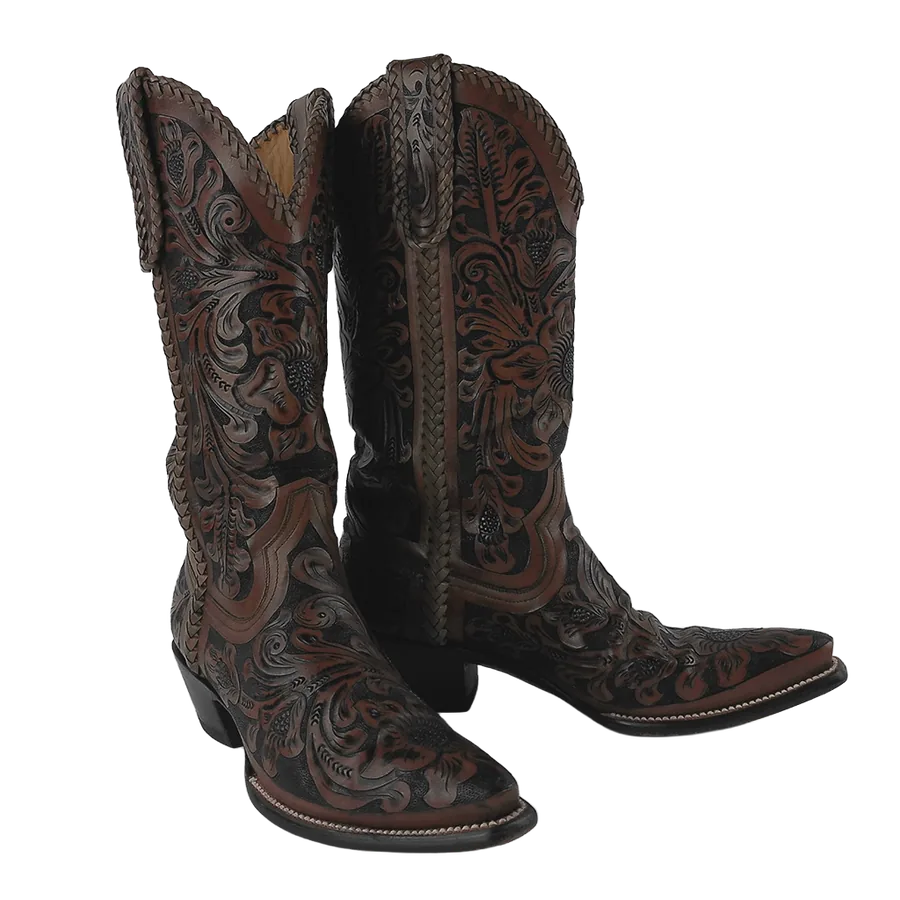
Boots by J.B. Hill, Santa Fe Boot Company, and Tres Outlaws.
A Gallery of Tooled Boots
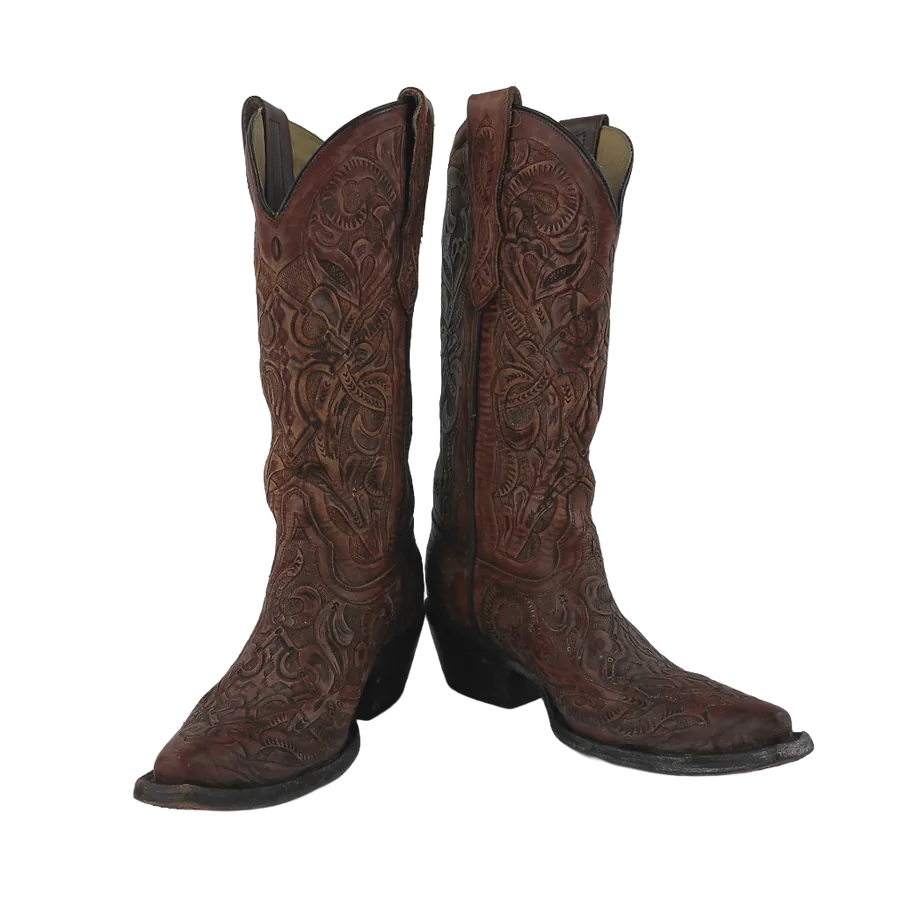
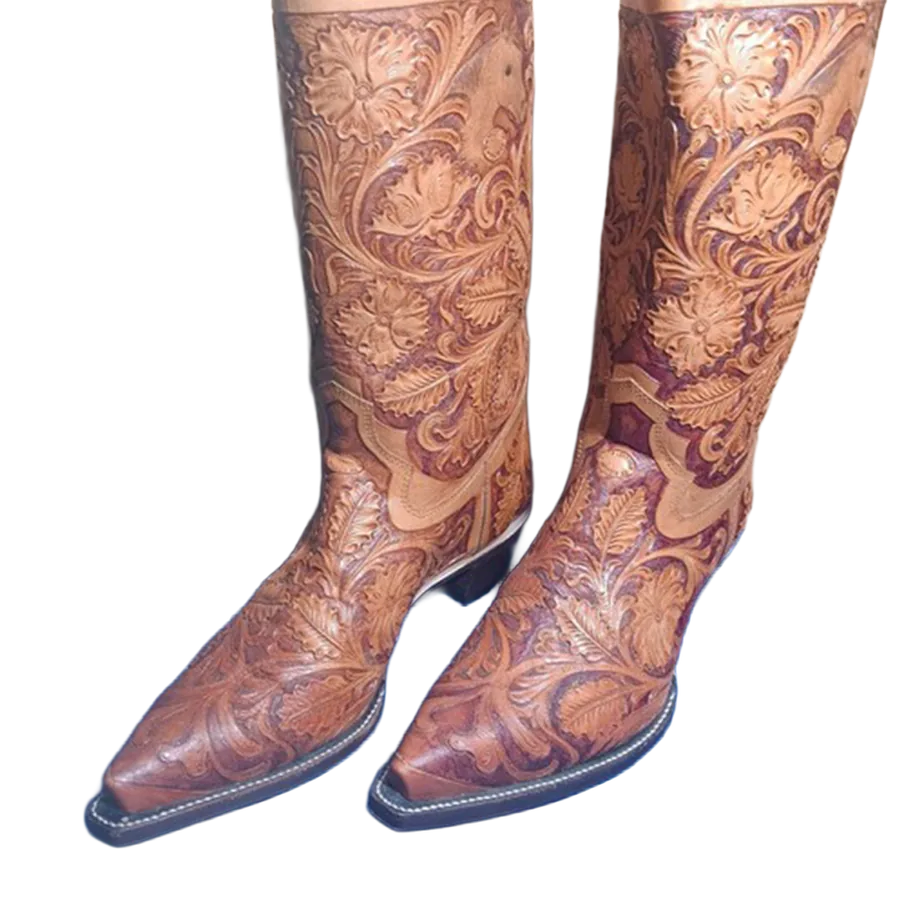
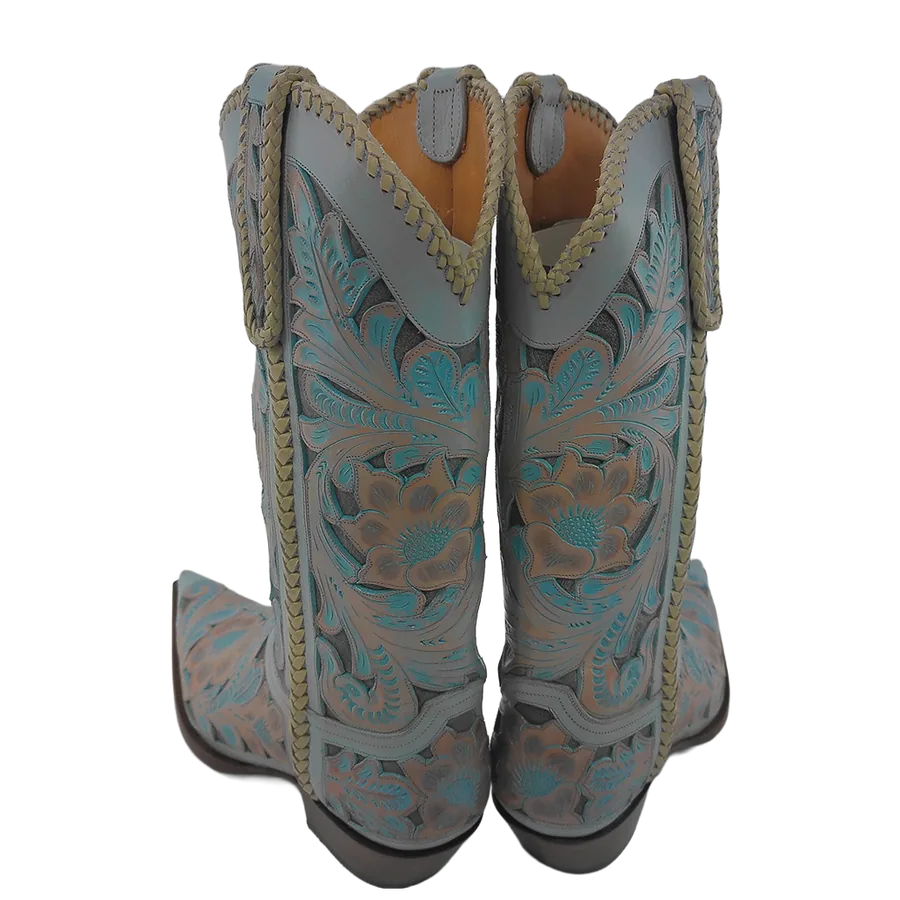
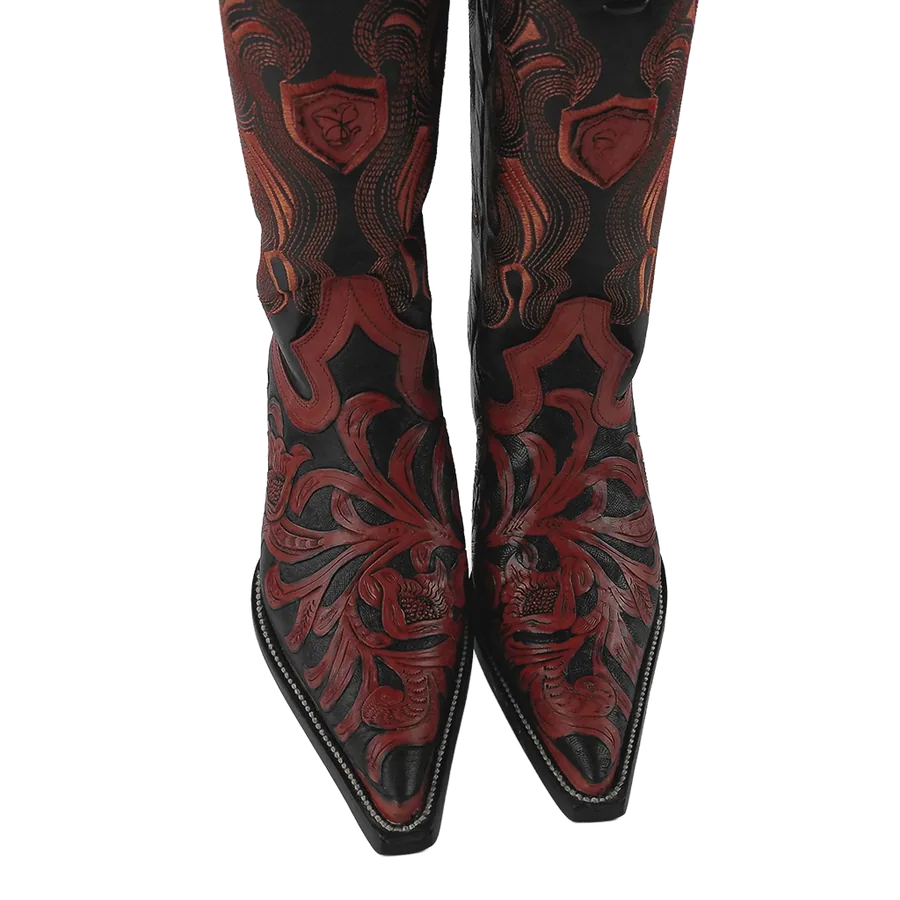
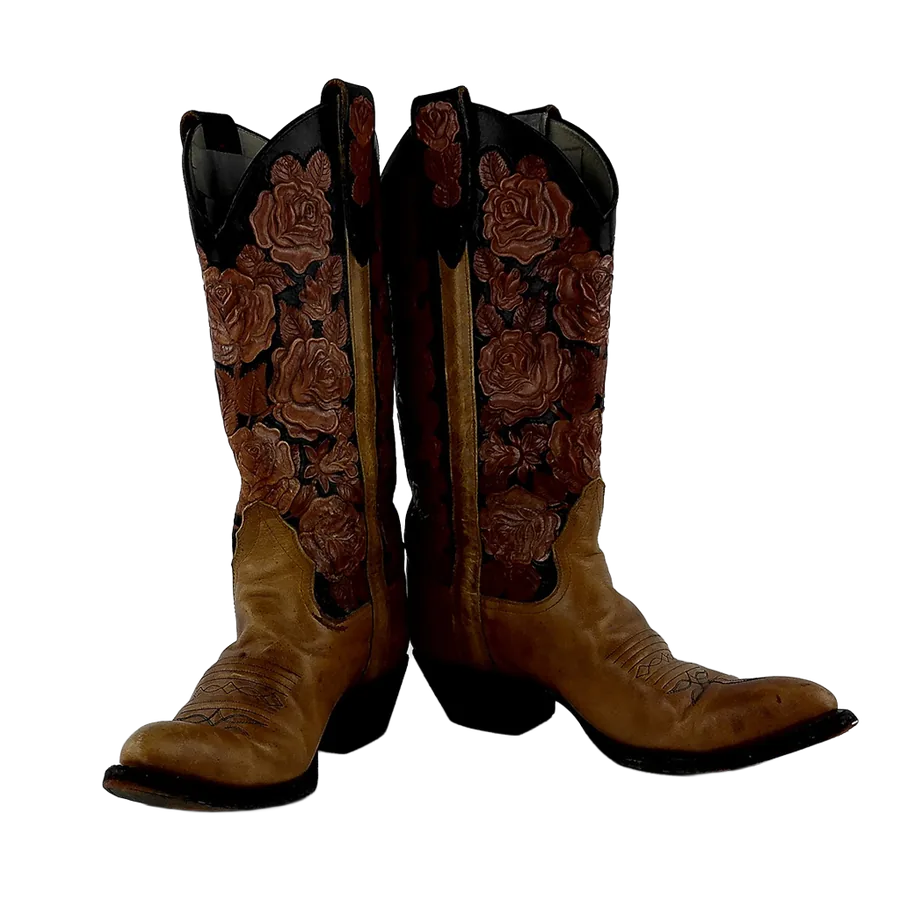
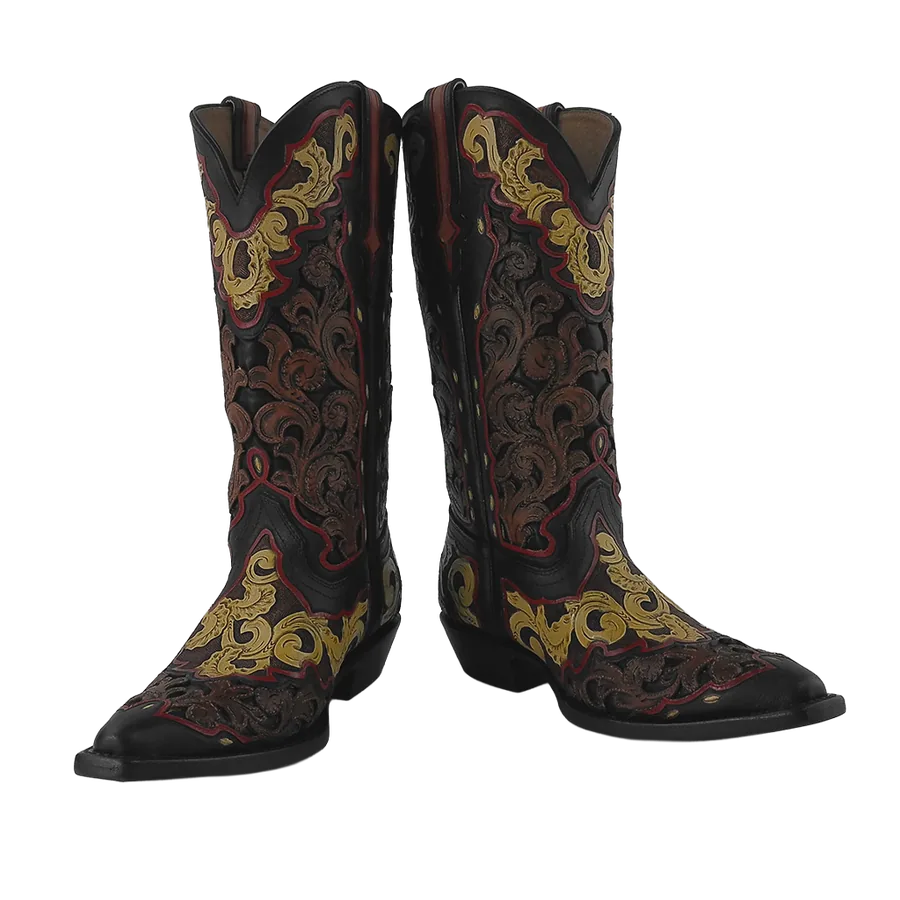
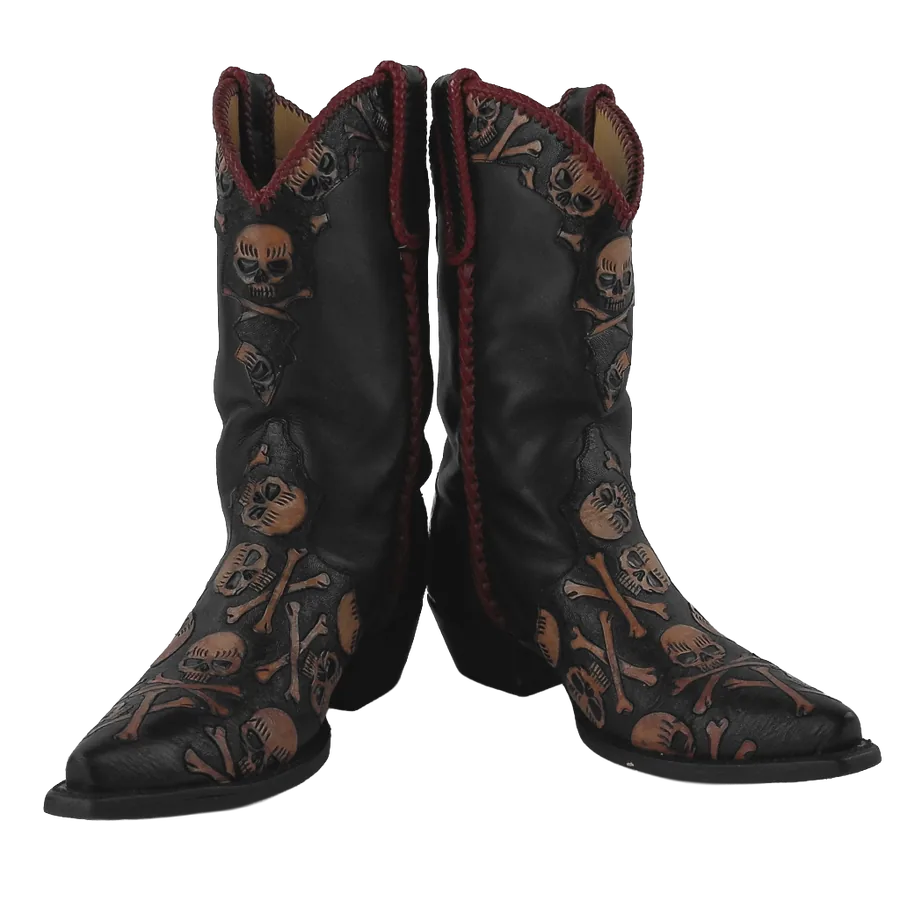
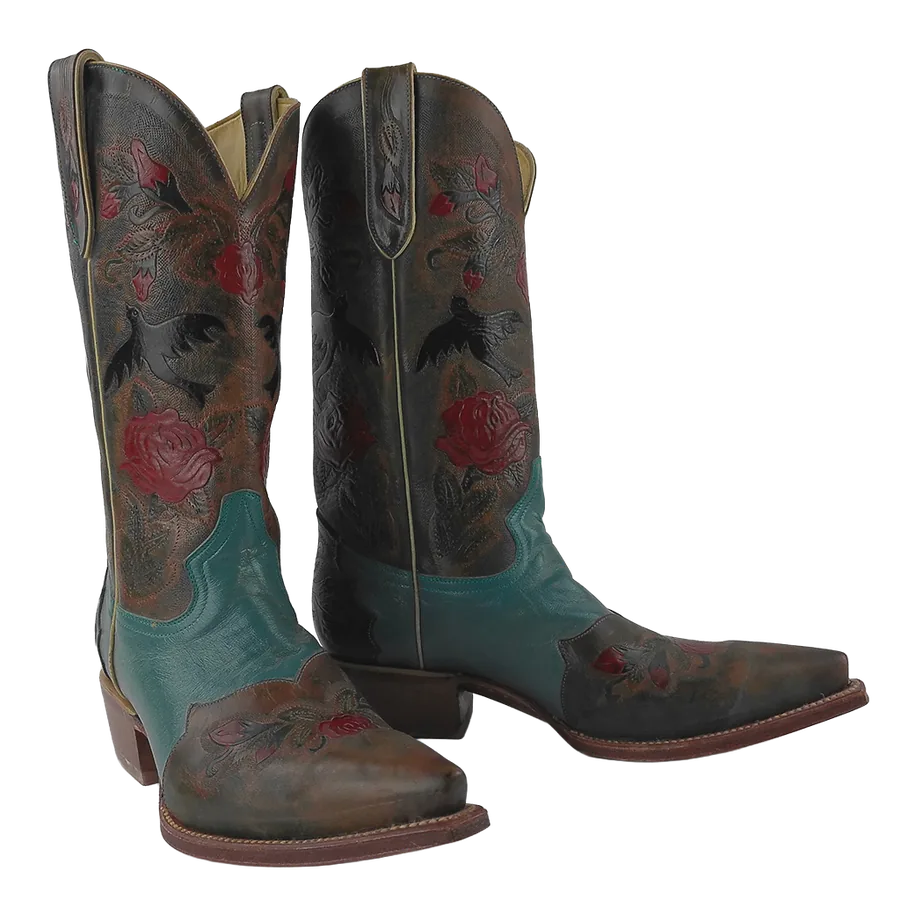
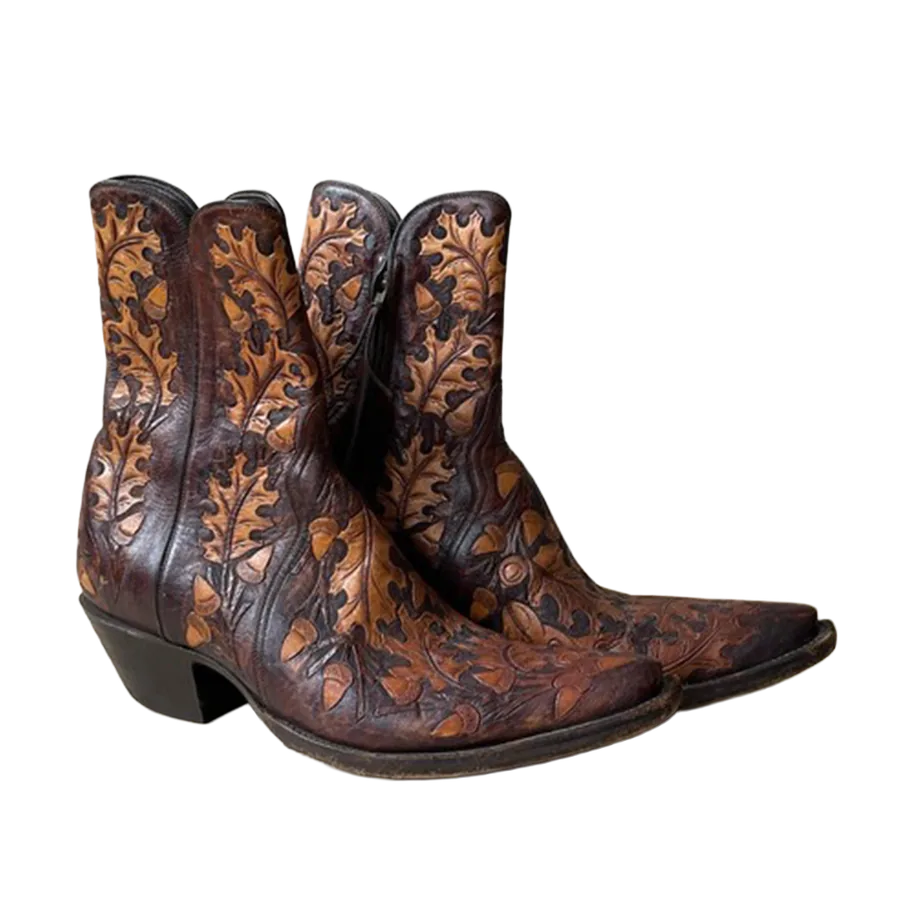
Hand tooling takes many forms. These pairs from the TW Collection show the main styles you’ll run into. Select a photo to see it full size.
Floral carving
The classic Western style: flowers, leaves, and scrolls cut with a swivel knife and stamped for depth, often across the whole boot.
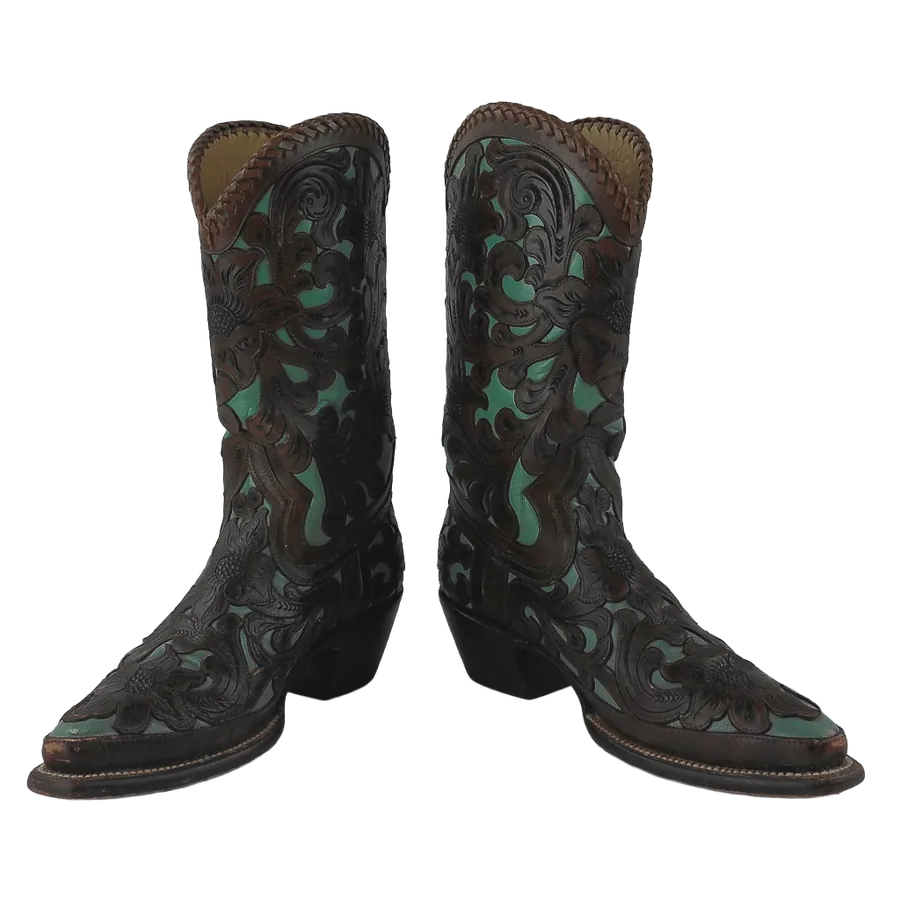
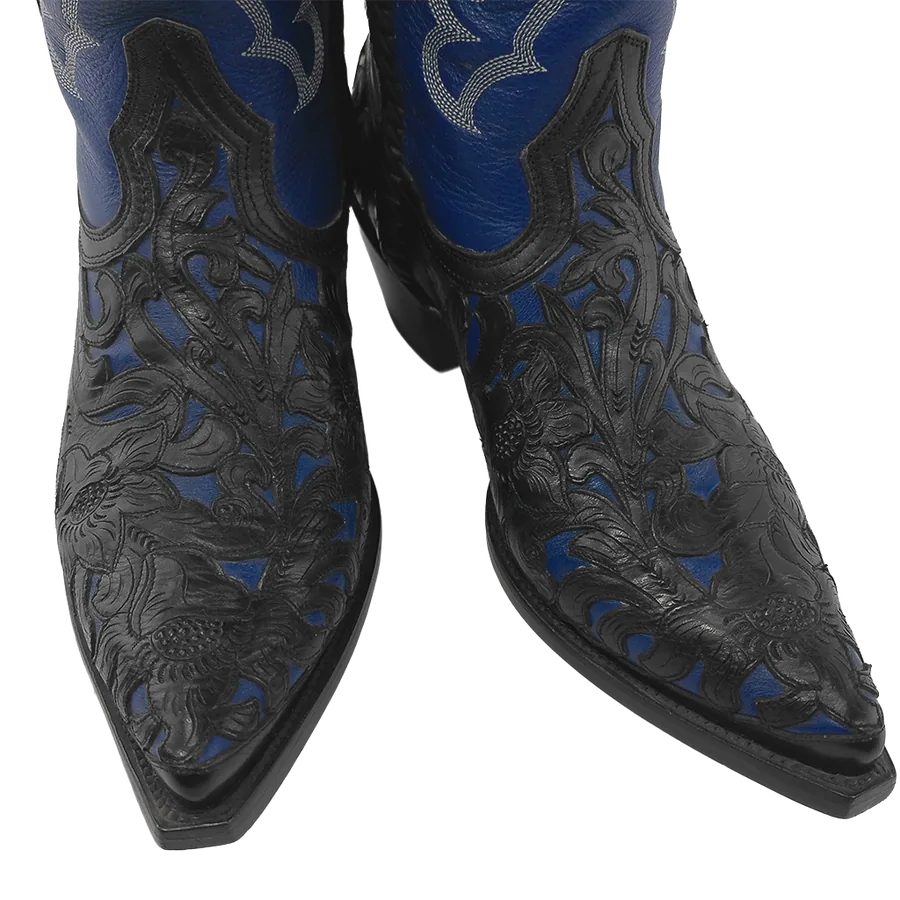
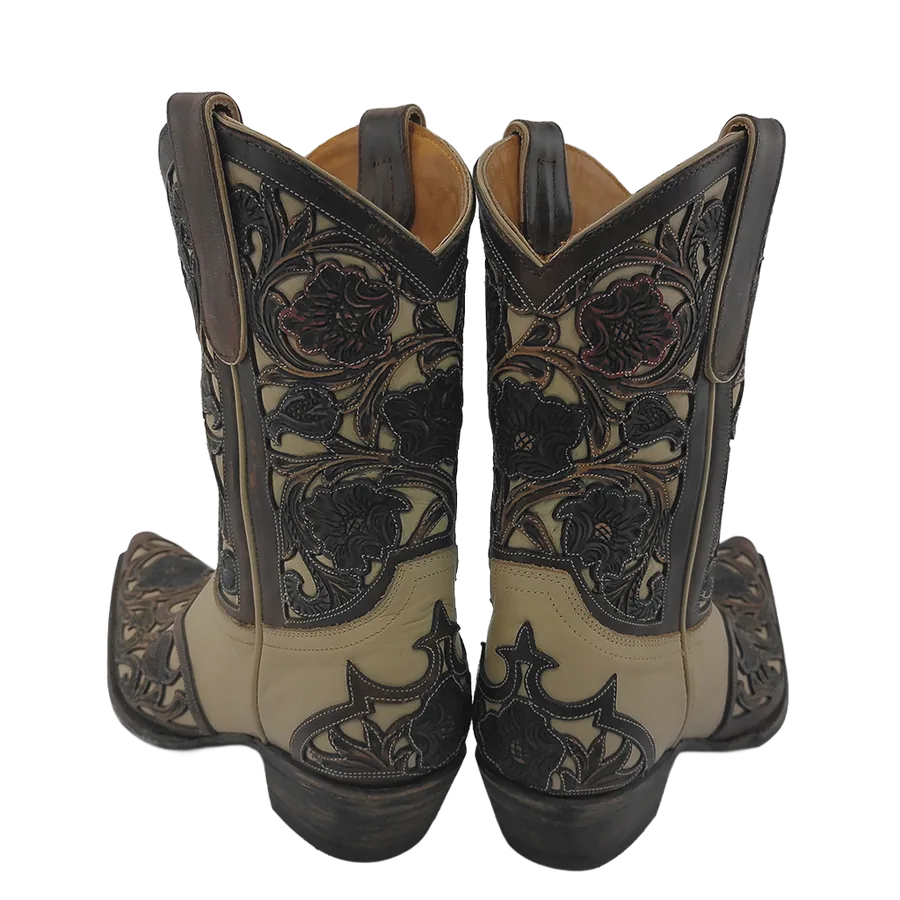
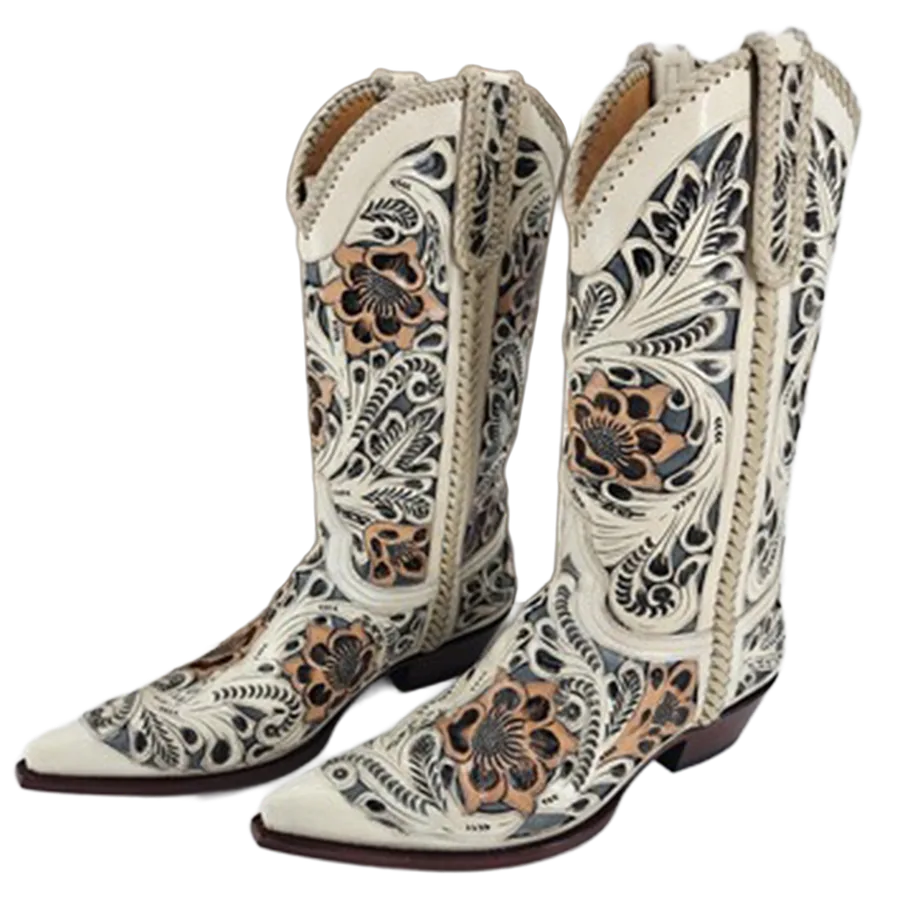
Tooled overlays
Tooled leather cut out around the design and laid over a contrasting color, so the background shows through.
Figures and motifs
Beyond flowers: skulls, birds, and oak leaves, carved and often hand-colored.
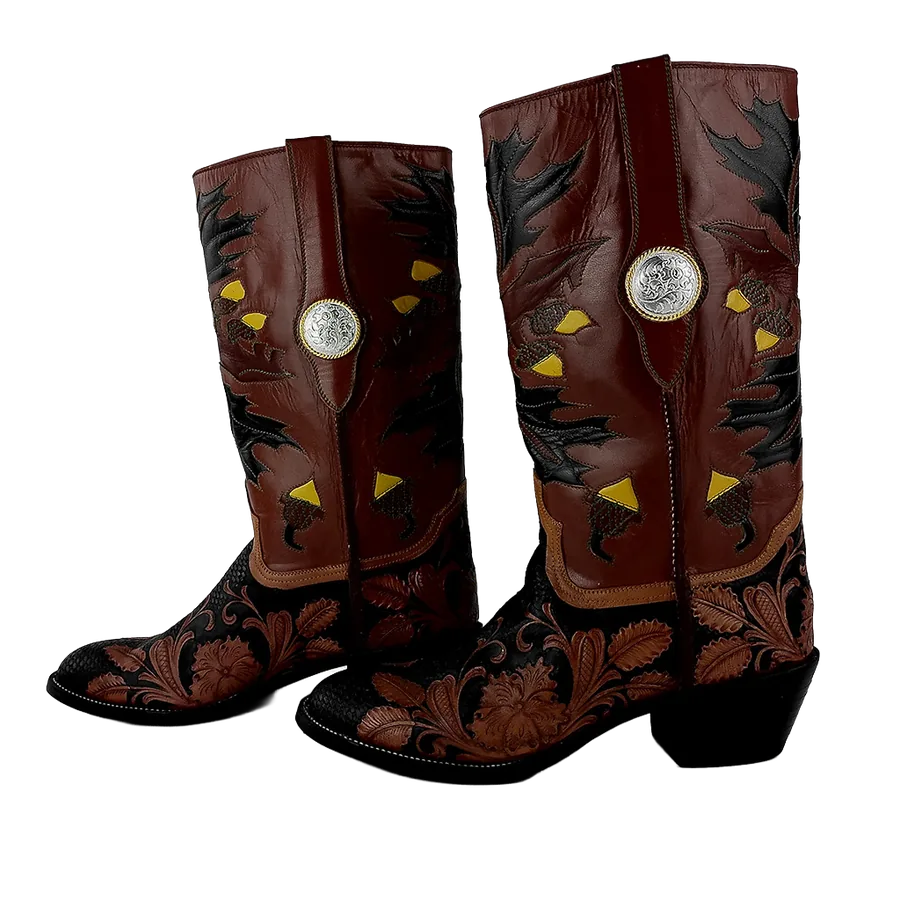
Tooling as an accent
A little tooling goes a long way when it’s set against plain or exotic leather.
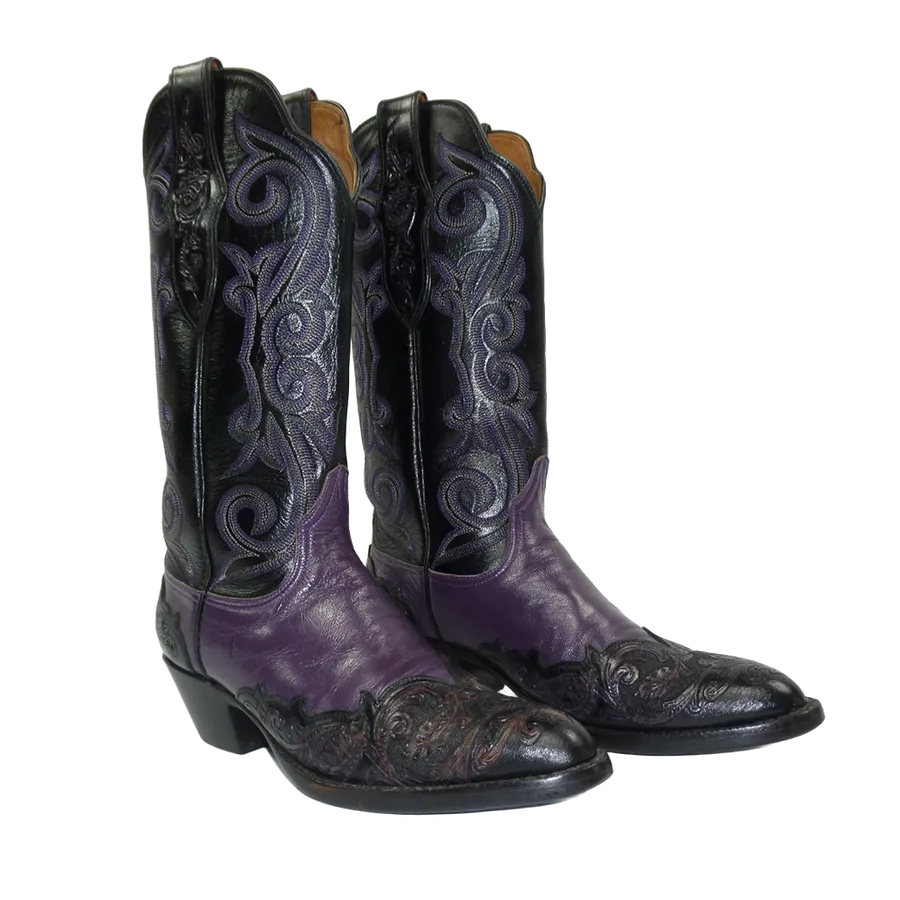
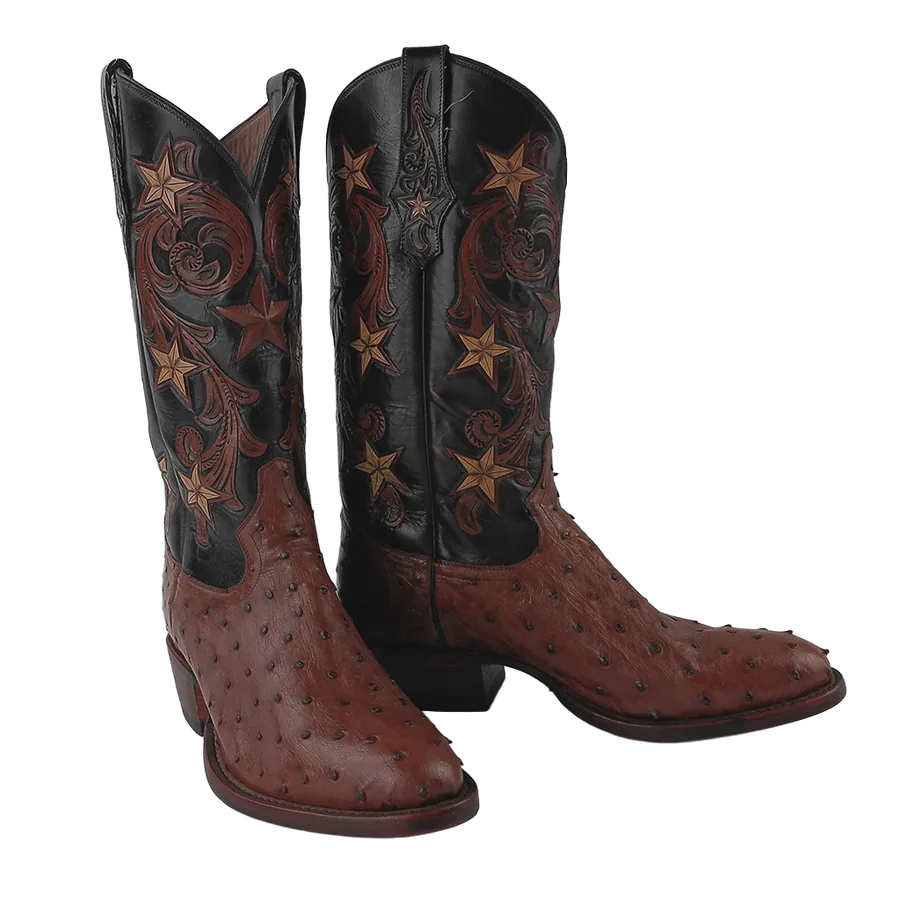
Recognize the maker of one of the custom pairs? If so, let us know.
Tooling is a demanding craft that takes real patience to master, and it shows up on far more than boots — saddles, belts, wallets, and bags all carry the same hand-carved tradition. Artisans who still do this work by hand are increasingly hard to find; a number of the makers in our bootmaker profiles, including J.B. Hill and Tres Outlaws, carry on the craft.